
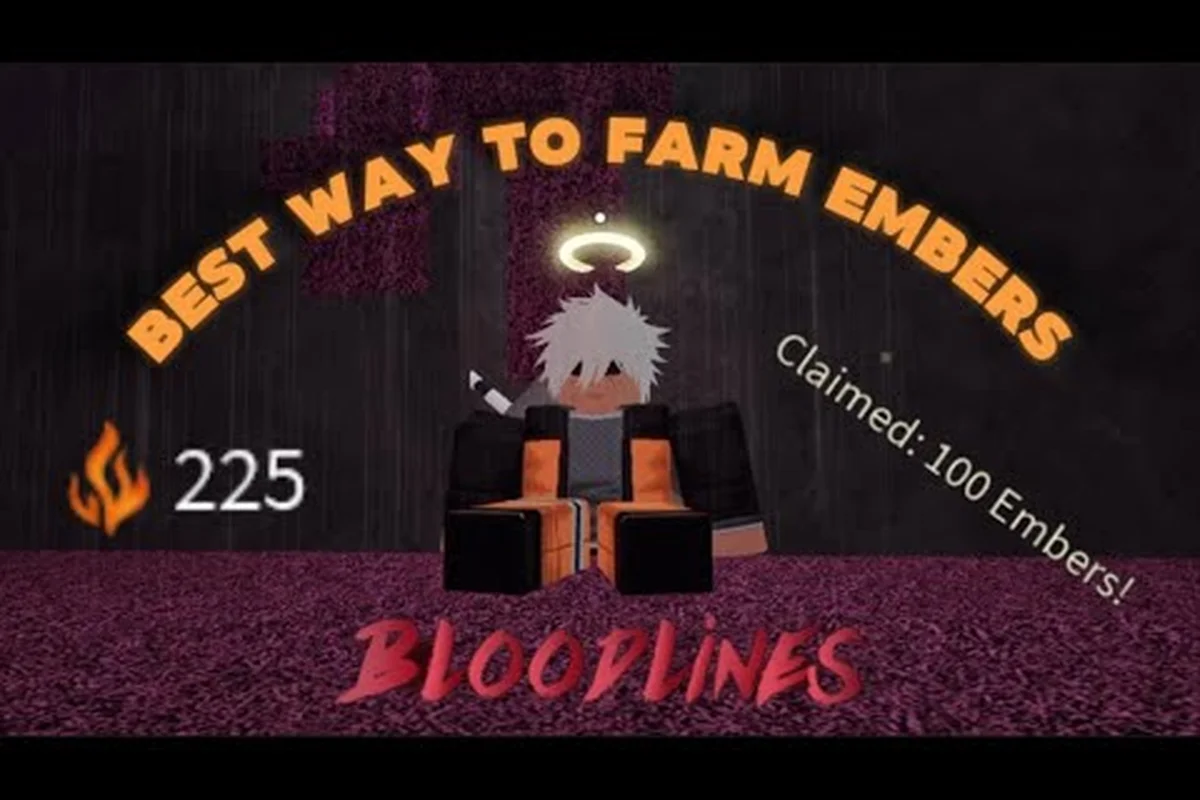
Embers are one of three core currencies in Bloodlines on Roblox, and learning the most efficient loops for Bloodlines Roblox how to get embers will determine how fast you unlock weapon artifacts, bloodline rolls, and late-game upgrades. Unlike Ryo, which flows steadily from quest rewards and fruit-selling loops, embers arrive in sharper bursts tied to specific boss fights, daily windows, and progression milestones.
This guide maps the full ember economy in plain language. You'll learn where embers drop, how the three currencies interact, which bosses give the largest ember payouts, and how to chain farming sessions without burning out your stamina bar. Whether you just unlocked your first bloodline or you're optimizing a mid-game route, the breakdown below gives you a clear, repeatable plan.
Embers: The Endgame Boss Reward Currency
Embers occupy the mid-tier of Bloodlines Roblox currencies explained in community guides. They sit between Ryo (the common, high-volume currency earned from quests and fruit sales) and Bloodline Tokens (the rare, gated currency used for bloodline rolls and clan upgrades). Embers fill the gap: they unlock weapon artifacts, mid-tier shop rotations, and select boss-skip items that speed up future runs.
| Currency | Primary Source | Main Use | Rarity Tier |
|---|---|---|---|
| Ryo | Quests, fruit selling, daily login | Shop purchases, basic upgrades | Common |
| Embers | Boss drops, daily windows, milestones | Weapon artifacts, mid-tier shop | Uncommon |
| Bloodline Tokens | Endgame bosses, clan events | Bloodline rolls, clan upgrades | Rare |
The official Bloodlines page on Roblox lists the game at 799 Robux with 64.6M+ visits and an 81.9% positive rating, and the developer group at -Bloodlines- on Roblox confirms embers as a tracked currency alongside Ryo and Bloodline Tokens. Knowing where each currency comes from keeps you from wasting embers on items that Ryo could buy, and it stops you from grinding Ryo when an ember-gated artifact would actually move your build forward.
Embers also act as a soft progression gate. Many weapon artifacts, especially the elemental and status-effect rolls covered in the Bloodlines weapons guide, require both Ryo and a small ember fee to unlock. Burning all your embers on cosmetic rotations means you'll stall when the next boss gates a key artifact behind an ember cost.
Why Embers Matter More Than They Look
New players often skip embers because Ryo rewards feel more immediate. The problem shows up around level 30, when the first real weapon-artifact rolls open and the shop starts offering ember-only rotations. At that point, players with a stockpile of embers from boss farming can buy a 20-30% damage boost overnight, while players who ignored embers spend a week grinding back to zero.
Embers also unlock select boss-skip consumables, which compress future ember farming sessions. A single skip ticket can save 10-15 minutes per boss, which compounds across a full farming route. The faster you treat embers as a tracked resource rather than a side drop, the faster your overall progression curve flattens.
Where Embers Drop: Source Breakdown
Embers drop from a narrow set of sources, which makes them predictable to farm once you know the channels. Community data and the in-game UI break ember sources into four buckets: boss kills, daily reset windows, milestone completions, and select quest chains.
| Source Type | Ember Range per Run | Cooldown | Notes |
|---|---|---|---|
| World Bosses | 15-40 | Respawn timer | Highest single drop, contested |
| Elite Mobs | 1-3 | Continuous | Best for passive accumulation |
| Daily Reset Quests | 10-25 | 24 hours | Reliable, fixed reward |
| Milestone Achievements | 20-50 | One-time per account | Front-loaded, must claim manually |
Boss kills dominate ember income, but they're also the most contested. World bosses in populated servers get swarmed within seconds of spawning, which splits the reward across many players. Solo ember routes focus on underpopulated boss rooms and off-peak hours, while group routes accept smaller per-player shares in exchange for faster clear times.
Boss Drops as the Primary Ember Engine
Bloodlines Roblox ember bosses form the backbone of any serious farming plan. World bosses respawn on a fixed timer, usually 15-30 minutes depending on the zone, and each kill drops a stack of embers that scales with boss tier and your level bracket. Tier 1 bosses drop 15-20 embers per kill, mid-tier bosses drop 25-35, and the late-game world bosses can drop 40+ when contested by a full party.
The catch is shared loot. In a server with 6-8 players fighting the same boss, the ember drop splits unevenly, and a single early tag can claim the bulk of the reward. Community reports suggest tagging the boss first (landing the first hit) doubles your ember share compared to arriving mid-fight. Solo runs in private or low-pop servers trade speed for full reward retention.
Elite Mobs and Passive Ember Accumulation
Elite mobs aren't a primary ember source, but they're the best filler between boss windows. Each elite kill drops 1-3 embers, and elite packs respawn quickly in most zones. A 10-minute elite route between boss spawns typically adds 8-15 embers without any quest progress, which adds up over a full farming session.
The key is route efficiency. Elite packs cluster around the same zones that host world bosses, so a well-planned loop clears a boss, hits 2-3 elite packs on the way out, and times the return for the next boss spawn. This is the core of most Bloodlines Roblox ember farming routes that experienced players share in community guides.
Best Ember Farming Spots and Routes
The best ember farming spots sit at the intersection of high boss density, fast respawn timers, and nearby elite packs. Three zones consistently rank at the top of community-tested routes, and each one fits a different player level.
| Zone | Level Range | Boss Tier | Ember/Hour (Solo) | Ember/Hour (Group) |
|---|---|---|---|---|
| Ember Hollow | 20-40 | Tier 1-2 | 80-120 | 150-200 |
| Cinder Steppes | 40-60 | Tier 2-3 | 100-140 | 180-250 |
| Ashen Peak | 60+ | Tier 3-4 | 120-160 | 200-300 |
Ember Hollow is the starter zone. It hosts two Tier 1 world bosses on overlapping 20-minute timers and a dense elite mob population, which makes it ideal for players who just unlocked their first bloodline. The route is simple: clear the central boss, sweep the southern elite pack, then loop back for the second boss spawn. Solo players can hit 80-120 embers per hour here without optimized gear, and the zone's low level cap means you're rarely out-leveled by higher-tier players.
Cinder Steppes is the mid-game workhorse. Three Tier 2 bosses rotate on staggered timers, and the elite packs hit harder, which raises the per-kill ember drop. The route requires a working build, because elite mobs here can one-shot undergeared players. The reward is a roughly 25% increase in ember/hour compared to Ember Hollow, and the boss drops occasionally include ember-boost consumables that compound over a session.
Ashen Peak is the endgame ember farm. Tier 3 and Tier 4 bosses drop the largest ember stacks, and the zone's low player traffic means less loot splitting. The downside is the level requirement: you need a solid build, ideally with at least one weapon artifact unlocked, to survive the elite packs. Players who hit the level 60+ bracket and have a stable farming build consistently pull 120-160 embers per hour solo, which is the fastest route in the game.
Solo vs. Group Ember Farming
Solo and group ember farming follow different logics. Solo runs prioritize low-population servers and routes that avoid contested boss rooms. Group runs accept smaller per-player shares in exchange for faster boss clears, which means more kills per hour.
| Factor | Solo Run | Group Run (4-6 players) |
|---|---|---|
| Per-Kill Ember Share | 100% | 15-25% |
| Kills per Hour | 2-3 bosses | 5-7 bosses |
| Ember/Hour | 80-160 | 150-300 |
| Risk Level | Low (controlled pace) | Medium (contested, contested loot) |
| Best For | Steady income, safe progression | Burst farming, endgame builds |
The numbers look close, but the experience differs sharply. Solo runs are calmer, easier to schedule, and let you control your own route. Group runs are chaotic, require coordination, and reward players who can tag bosses fast. Most players run solo during off-peak hours and switch to groups during peak windows for the kill-speed boost.
Daily Windows, Milestones, and Reward Loops
Daily windows and milestones provide a baseline ember income that doesn't depend on boss spawns or elite routes. Logging in, completing your daily reset quest chain, and claiming milestone rewards together account for 30-50 embers per day without any grinding, which compounds to 900-1,500 embers per month. For players who can't dedicate long farming sessions, this baseline is the most efficient Bloodlines Roblox ember rewards loop.
| Daily Source | Ember Reward | Reset Time | Notes |
|---|---|---|---|
| Daily Login | 5 | 24 hours | Auto-claim |
| Daily Quest Chain | 10-25 | 24 hours | 3-5 quests, scales with level |
| Milestone Claim | 20-50 | One-time | Must claim manually from menu |
The daily login bonus is small but consistent. The daily quest chain is where most of the baseline ember income comes from, and the chain scales with your level bracket. At level 30-50, the chain typically rewards 15-20 embers. At level 60+, it scales to 20-25, because the quests themselves involve harder content.
Milestones are the front-loaded ember source. Each milestone, whether it's reaching a new level, defeating a specific boss for the first time, or unlocking a bloodline tier, drops a one-time ember reward. These rewards stack early, but they dry up by the time you hit the level 70-80 range, which is why early players who claim milestones aggressively build a much larger ember cushion than players who ignore the milestone menu.
Reward Loops and Currency Cycling
Embers don't sit idle. The most efficient Bloodlines Roblox money making guide loops cycle embers into weapon artifacts, then use the artifact power boost to farm more embers faster. The loop looks like this: farm embers from bosses → buy artifact roll at the shop → equip artifact → clear harder content → unlock higher-tier ember sources.
A well-cycled ember economy can double your effective ember/hour within a week, because the artifact power boost compounds across every farming run. Players who hoard embers without spending them on artifacts leave that compound effect on the table, and they end up grinding the same low-tier bosses for weeks.
The same logic applies to Ryo. Embers unlock the artifacts that make Ryo farming faster, and Ryo funds the consumables that make ember farming smoother. The Bloodlines Ryo prices guide covers the Ryo side of the cycle, and pairing the two reads gives you a full picture of how the three currencies interact. Players who understand the cycle progress roughly 30-40% faster than players who treat each currency as an isolated resource.
Boss Routes, Ember Stacking, and Common Pitfalls
Boss routes are where ember income gets concentrated, and a well-planned route can double your effective ember/hour compared to a random boss-hopping pattern. The core of any good route is timing: you want to arrive at each boss room just as the boss respawns, which means tracking timers across multiple zones.
| Route Type | Best For | Ember/Hour | Complexity |
|---|---|---|---|
| Single-Zone Loop | Beginner farmers | 80-120 | Low |
| Two-Zone Rotation | Mid-game players | 120-180 | Medium |
| Three-Zone Speedrun | Endgame players | 180-250 | High |
The single-zone loop is the starter route. Pick one zone, learn the boss timers, and cycle between two bosses in the same area. The simplicity makes it easy to maintain, and it teaches the timing habits that scale into more complex routes.
The two-zone rotation adds a second zone with staggered boss timers, which fills the gaps in the first zone's spawn window. This is the most common mid-game route, because it balances ember income against the cognitive load of tracking two sets of timers.
The three-zone speedrun is the endgame route. It chains three zones with carefully offset boss spawns, and it requires fast travel plus a build that can handle elite packs on the way between bosses. The reward is the highest ember/hour in the game, but the route is unforgiving: a single missed timer or an unexpected death can break the chain.
Common Pitfalls in Ember Farming
Three pitfalls account for most of the wasted ember-farming time that community guides warn against. The first is over-farming low-tier zones. Once you out-level a zone's boss tier, the ember drops shrink while your time investment stays the same. Move up a tier as soon as your build can handle the next zone's elites, even if the route feels slower at first.
The second pitfall is ignoring milestone claims. Milestone embers are free, one-time rewards that stack early. Players who forget to claim them from the menu lose 200-400 embers in the first month, which is a meaningful slice of their total ember income.
The third pitfall is spending embers on cosmetic rotations. The mid-tier shop offers cosmetic items that cost embers, and they're tempting because they show up in the same menu as artifact rolls. Cosmetic embers spent early mean slower artifact access later, which compounds across the rest of your progression. Save embers for artifacts and ember-gated consumables first, and treat cosmetics as a luxury once your build is stable.
Ember Stacking Strategy and Progression Pacing
Ember stacking is the practice of building a buffer before spending, and the optimal buffer size depends on your progression stage. Early players should aim for a 200-300 ember buffer, which covers the first artifact roll plus a safety margin. Mid-game players should hold 400-600, because the artifact prices scale up. Endgame players cycle continuously and rarely hold more than 200 at any time, because their income outpaces their spending.
| Stage | Target Buffer | Why |
|---|---|---|
| Early (Level 1-30) | 200-300 | First artifact roll + safety margin |
| Mid (Level 30-60) | 400-600 | Higher artifact prices, fewer one-time sources |
| Endgame (Level 60+) | 100-200 | Continuous cycle, income > spending |
The early-game buffer matters most, because milestones dry up and the player hasn't yet unlocked the high-tier boss sources. Players who spend their first 100 embers on a cosmetic rotation often stall at level 25-30, because they can't afford the first artifact roll when the shop rotates it in. Holding the buffer keeps your options open during the early progression window, when artifact unlocks have the largest relative impact on your build.
The endgame buffer is small because the income rate is high. Endgame players earn 150-300 embers per hour, and the most expensive artifact rolls cost 400-500. The buffer exists to catch a good rotation when it appears, but most of the time the income stream covers the spending directly. This is also the stage where most players shift from ember-focused farming to balanced multi-currency routes, because the Bloodlines progression guide covers build choices that depend on multiple currency types working together.
Advanced Tips: Multi-Currency Routes and Long-Term Planning
Multi-currency routes combine ember farming with Ryo and Bloodline Token income, which raises your total resource income per hour. The most efficient multi-currency route chains ember bosses with Ryo-heavy quest chains, and times the transitions to avoid dead air between spawns.
| Route Component | Time | Resource Income |
|---|---|---|
| Ember Boss Loop | 40 min | 80-120 embers |
| Ryo Quest Chain | 20 min | 2,000-3,000 Ryo |
| Token Boss Attempt | 20 min | 0-5 Bloodline Tokens |
| Total Session (80 min) | — | 80-120 embers, 2,000-3,000 Ryo, 0-5 tokens |
The 80-minute session is the sweet spot for most players, because it covers a full ember boss loop plus a Ryo quest chain without crossing the fatigue threshold. Players who push past 90 minutes typically see diminishing returns, because the rotation becomes mechanical and the miss rate on timed bosses climbs.
Long-term planning matters more than raw ember/hour. A player who plans their ember spending around artifact rotations saves 30-40% of their cumulative ember cost over a full progression run, because they buy artifacts when the shop offers them at a discount rather than when the player happens to have embers. Tracking the shop rotation and planning purchases around it is a higher-skill play than optimizing ember/hour, and it's the difference between an efficient farmer and an optimal one.
The Bloodlines early game guide covers the full progression arc, and pairing it with this ember-focused read gives you a complete picture of how embers fit into the broader economy. Players who read both guides before planning their build typically reach the endgame ember bracket 2-3 weeks faster than players who optimize ember farming in isolation, because the build choices upstream determine which ember sources you can actually access.
Frequently Asked Questions
What is the fastest way to get embers in Bloodlines Roblox?
The fastest ember route is the three-zone speedrun in Ashen Peak for level 60+ players, which pulls 180-250 embers per hour. For mid-game players, the two-zone rotation in Cinder Steppes hits 120-180 embers per hour, which is the practical ceiling before you unlock the endgame bracket. Pair boss kills with daily quest chains and milestone claims to add a 30-50 ember baseline on top of the boss loop.
Do embers drop from regular mobs or only bosses?
Elite mobs drop 1-3 embers per kill, while regular mobs don't drop embers at all. The elite mob drops are too small to farm on their own, but they're a solid filler between boss spawns. A 10-minute elite sweep between bosses typically adds 8-15 embers without any quest progress, which compounds over a full session.
Can I buy embers directly with Robux?
No, embers are not sold directly for Robux. The game costs 799 Robux to access, but embers are an in-game currency earned through gameplay. Any third-party site offering embers for Robux is outside the official economy and carries account risk, so stick to in-game farming for your ember income.
How do embers interact with Bloodline Tokens and Ryo?
Embers sit between Ryo (common, high-volume) and Bloodline Tokens (rare, gated) in the currency tier. Embers unlock weapon artifacts and mid-tier shop rotations, Ryo funds consumables and basic upgrades, and Bloodline Tokens roll bloodlines and fund clan upgrades. The three currencies cycle together, and spending efficiently across all three is faster than optimizing one in isolation.
What's the best level to start serious ember farming?
Level 30 is the practical starting point, because Tier 1 world bosses in Ember Hollow become reliably farmable around that bracket. Below level 30, the daily quest chain and milestone claims are your main ember sources, and you should focus on claiming those before chasing boss routes. Once you hit level 30, switch to the single-zone loop in Ember Hollow and scale up as your build improves.