
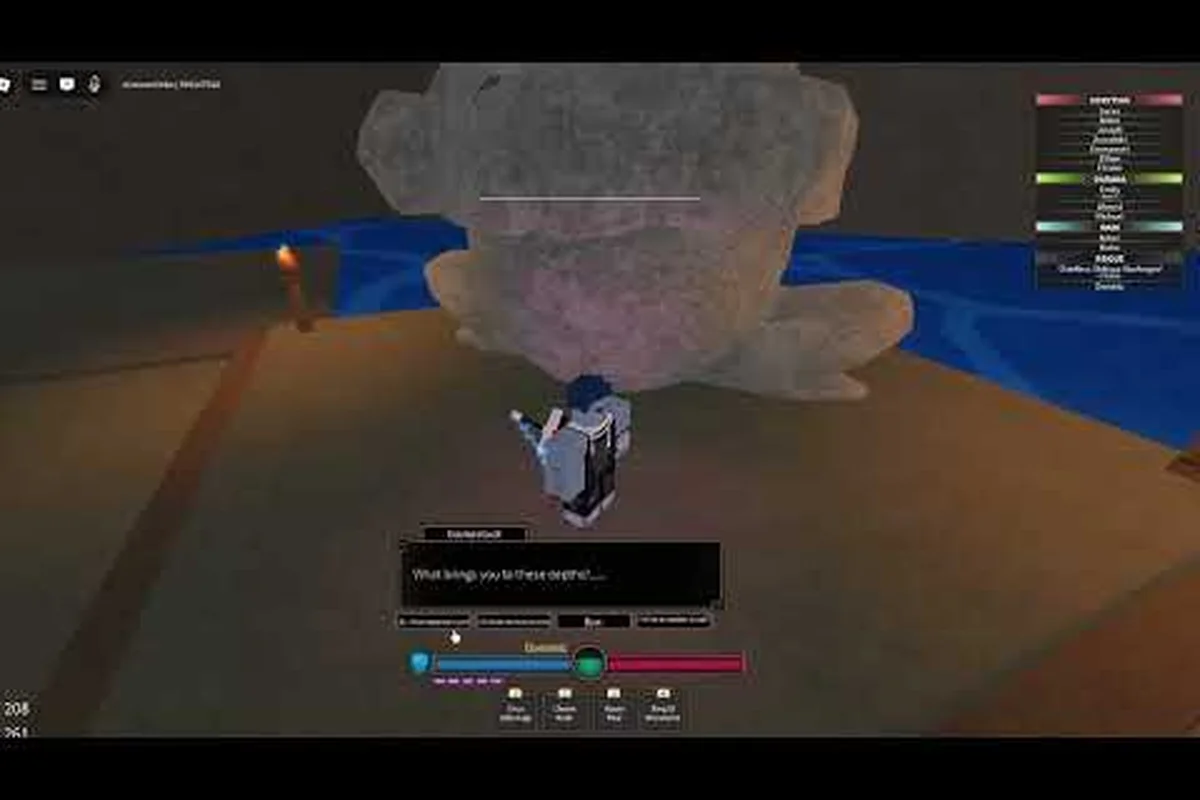
Village politics in Bloodlines Roblox aren't just flavor text — they dictate which quests appear, who attacks you on sight, and whether the bounty board ever cools down. Choosing a faction, climbing its ranks, and managing the rogue ninja system that bleeds into every village's borders is the game's core loop after the early tutorial. This guide breaks down the political landscape, the village exam pipeline, and how the missing ninja bounty system creates ripple effects that even brand-new players feel within their first hour.
The faction map in Bloodlines is denser than most Naruto-inspired Roblox titles because villages don't just offer different jutsu; they run independent councils, maintain rival bounties, and actively police their own defectors. Understanding the political mechanics is the difference between a smooth Genin grind and being hunted across the map by players two ranks above you. Before diving in, the overview of Bloodlines Roblox villages covers the high-level faction list if you need a primer.
Bloodlines Roblox Village Factions and Their Political Stances
Every village in Bloodlines runs on a soft-alignment system. A village's political stance determines which other villages it considers allies, which it treats as neutral, and which it labels hostile — and that classification directly controls spawn-zone behavior, NPC vendor pricing, and the bounty missions posted to your board. According to community data tracked on the official Bloodlines Roblox page, the core loop revolves around the village-vs-rogue choice, with hidden villages layered on top as a third axis.
| Village | Default Stance | Political Influence | Notes for New Players |
|---|---|---|---|
| Konoha (Starter) | Neutral to all non-rogue | High — sets seasonal event dailies | Easiest exam path; lowest bounty aggression |
| Suna | Allied with Konoha | Medium | Early access to Wind jutsu quests |
| Kiri | Rival to Konoha | High — runs its own bounty contracts | Aggressive missing ninja hunters |
| Awa / Kumogakure | Neutral-to-hostile depending on rep | Medium | Hidden-village-style unlock chain |
| Rogue | Hostile to every village | Variable | Bounty target for every faction |
Village politics shift through seasonal events and player-driven council votes, meaning a village that's allied today can become hostile after a major server-wide event. Players report that the rogue ninja system is the single biggest political destabilizer — a single defector can raise a village's bounty activity for the entire server, because once a player leaves the village their head gets added to the global wanted board.
How Alliances Form and Break
Alliances in Bloodlines aren't hardcoded. They're built through a combination of village reputation, council-quest completions, and a hidden "diplomacy" meter that fills as allied villages co-complete seasonal objectives. The meter is invisible to players, but community testing on the [Fandom Ranks wiki] shows that completing cross-village joint quests in a single server session pushes the meter roughly 2-3% per run. Once it crosses 80%, the two villages unlock a shared bounty board — which is where the bounty system starts to seriously impact your daily route.
Breaking an alliance is far easier than building one. A village's leader can declare cold-war status if its missing ninja caseload climbs past a community-estimated threshold (players report around 12 active deserters as the trigger), which re-routes bounty rewards toward hunting the offending village's defectors rather than outside targets.
Bloodlines Roblox Village Exam Path and Rank Climbing
The village exam is the formal gate between ranks, but it's also the most political activity in the game. Every exam is administered by the village's Jonin council, and the council's current political mood — friendly, suspicious, or hostile — changes the exam's difficulty curve. A village in cold-war status will throw extra combat waves into the Chunin Trials, while a village riding high on alliance bonuses will sometimes add bonus reward tiers.
| Rank | Exam Type | Political Gate | Average Attempt Cost |
|---|---|---|---|
| Genin | None — automatic starter | None | 0 |
| Chunin | Combat trials + paper exam | Requires 2 village quests completed | Low |
| Jonin | Boss fight + leadership test | Council vote must be in "open" phase | Medium |
| Anbu | Stealth + loyalty mission | Village leader endorsement required | High |
| Kage | Full council election | All allied villages must acknowledge | Very high |
The interesting wrinkle is the missing ninja mechanic tied to exams. If you fail the Jonin exam three times, your character is automatically flagged in the village's internal defector log — not enough to be exiled, but enough to mark you on the bounty system for rival villages to see. Kiri in particular uses this flag to send bounty hunters after failed Konoha examinees, which is a documented escalation path according to community reports. Full rank-up steps for the Jonin gate are covered in how to become Jonin in Bloodlines Roblox, which pairs well with the political read here.
Council Phase and Exam Windows
The exam council moves through three named phases: closed, open, and lockdown. Closed means the council is processing previous examinees and won't accept new applicants for 24 in-game hours. Open is the standard window — you can queue, and the difficulty is the published baseline. Lockdown is the rarest phase, triggered by a village entering cold-war status; during lockdown, only village members with high reputation can attempt the exam, and outside applicants are denied outright.
Players who want to optimize should watch the village's bulletin board for the phase change broadcast. Timing your exam attempt to the first hour of an open phase typically nets a smoother run, because the council's combat trial waves haven't accumulated lag from earlier examinees' server stress.
Bloodlines Roblox Join Hidden Village Methods and Requirements
The phrase "hidden village" gets used loosely in Bloodlines. Officially, there are two distinct categories: exclusive-start villages like Kiri that have a tougher entry path, and true hidden villages like the Awa-lineage enclave that only unlock after specific in-game conditions. Joining either type carries political weight, because the moment you leave your starter village for a hidden one, your old village's missing-ninja counter ticks up by one.
| Hidden Village | Unlock Trigger | Political Cost | Reward |
|---|---|---|---|
| Awa Enclave | Complete 5 Awa-lineage bounty contracts | Loses starter-village rep | Unique Earth jutsu line |
| Kumogakure Front | Reach Jonin + ally-meter threshold | Triggers cold-war review | Lightning jutsu + bounty immunity |
| Otogakure Cell | Defected-rogue only | Permanent hostile flag with starter | Rare Sound jutsu |
| Warfront Outpost | Server-wide event participation | Temporary neutral flag only | Event-locked cosmetics |
To join a hidden village legitimately, you almost always need to first climb to Chunin in your starter village — players who defect as Genin are usually one-shot by returning bounty hunters within minutes. The pattern matches what the broader village vs rogue guide describes: low-rank defections are punished harder than mid-rank defections because the bounty system treats fresh defectors as low-effort, high-volume targets.
Rogue Ninja System and Village Response
The rogue ninja system is the political lever every player eventually pulls, intentionally or not. Once you leave a village, your name enters the missing-ninja ledger, and every allied village's bounty board adds a contract for your head scaled to your previous rank. Former Jonin defectors carry roughly 5x the bounty value of former Genin, which is why most players report waiting until at least Chunin before testing the rogue life.
The system has a documented cooldown, though the exact timer shifts by server population. Community data suggests the ledger purges entries after roughly 72 in-game hours of inactivity in the defector's home region, but moving between the major hub zones resets the timer. For a deeper look at the rank ladder on the rogue side, the rogue path progression guide covers the D-rated through Akatsuki-leader climb that awaits after you leave.
Bloodlines Roblox Missing Ninja and Bounty System Mechanics
The missing ninja flag and the bounty system are two halves of the same political engine. Every desertion, failed leadership exam, or council betrayal feeds the missing-ninja ledger; the ledger feeds the bounty board; the bounty board sends hunters after you. Breaking the loop requires either running out the purge timer, paying off the village's headman (a steep in-game currency cost that scales with rank), or completing a redemption arc questline that exists for some — but not all — villages.
| Trigger | Missing-Ninja Status | Bounty Reward (Approx.) | Hunter Frequency |
|---|---|---|---|
| Voluntary defection | Permanent until purge | High | Constant |
| Failed Jonin exam (3x) | Soft flag | Medium | Periodic |
| Expelled by council | Permanent | Very high | Aggressive |
| Betrayed allied village | Permanent + cross-server | Maximum | Every server |
The bounty system doesn't just affect defectors. Completing bounty contracts is also the fastest non-exam rep path inside a village, which creates a weird political economy: villages that produce the most defectors also have the richest bounty boards, and bounty-rich villages attract mercenary players who technically belong to no faction at all. These mercenaries are the most politically flexible group in the game, and they often serve as the unofficial diplomats between hostile villages because no single village will accept them as a permanent member.
How to Read the Bounty Board Politically
The bounty board is one of the most reliable political-intel sources in Bloodlines. A board stacked with high-value contracts means the village is currently bleeding defectors — usually a sign of internal council tension or a recent seasonal event that pushed unhappy players out. A nearly empty board signals stability, which often correlates with an upcoming alliance event because villages only commit to joint objectives when their internal politics are quiet.
Players who want to play the political game at a meta level should screenshot their village's bounty board weekly. The trendline over a month tells you more about the village's political health than any council announcement, and it gives early warning when your own village is about to slip into cold-war status with a former ally.
Playing the Political Game: Practical Strategies for Each Role
Politics in Bloodlines rewards different play styles depending on which seat you're sitting in. A village loyalist cares about reputation, exam timing, and alliance-meter maintenance. A rogue cares about survival, bounty-avoidance routes, and when to surface for safe harbor. A mercenary cares about board liquidity and which villages are currently buying.
| Role | Primary Goal | Best Activity | Political Risk |
|---|---|---|---|
| Loyalist | Climb to Kage | Exam timing + alliance quests | Low — village protects you |
| Reformed Rogue | Earn pardon | Redemption questline + bounties | Medium — pardon is not guaranteed |
| Mercenary | Maximize bounty income | Cross-board hunting | Low — politically flexible |
| Defector | Survive + rank up rogue | Stealth + safe-zone rotation | High — constant hunters |
| Council Aspirant | Reach Kage seat | Endorsement farming + elections | Medium — rivals will sabotage |
The meta shifts noticeably with server population. On high-pop servers, the bounty system becomes oversaturated and bounty rewards crater, which pushes mercenaries toward alliance-quest grinding instead. On low-pop servers, defectors can survive longer between hunter spawns but pay heavier prices at the few remaining vendors, because the villages know they have leverage.
Long-Term Political Play
Players who plan to stay in one village long-term should treat the council's political phase as their primary calendar. The open phase is when you push for exams, alliance contributions, and reputation gains. The closed phase is when you grind bounties and side content. The lockdown phase is when you bank progress and avoid risky activities, because lockdown almost always precedes a major server event that reshuffles village politics.
For the rank-reset mechanic that some villages use to punish chronic defectors, the rank-up guide for rogues explains how the ascend path works once you've fully committed to the rogue side and burned the village bridges. That route closes off the political game entirely in exchange for the highest-ceiling combat ranks, so the choice is genuinely a fork rather than a soft preference.
Frequently Asked Questions
What does village politics actually affect in Bloodlines Roblox?
Village politics control bounty-board output, allied-village behavior, exam difficulty, and which NPCs will attack you on sight. A village in cold-war status hits its own members with harder combat waves during the Jonin exam and reroutes bounty rewards toward missing ninja contracts. According to community data, politics also influence seasonal-event participation, because only allied villages get the joint seasonal objectives.
How do I join a hidden village in Bloodlines Roblox?
You need to first reach at least Chunin rank in your starter village, then complete the hidden village's specific unlock trigger — usually a chain of bounty contracts or a rep threshold. True hidden villages like the Awa enclave won't even render the join prompt until the trigger is met. Expect your old village's missing-ninja counter to tick up the moment you accept the hidden village's offer.
What is the missing ninja bounty system?
The bounty system is a server-wide contract board that pays players to hunt defectors and flagged players. When you leave a village, fail the Jonin exam three times, or get expelled by the council, your name enters the missing-ninja ledger, and the board auto-generates a contract on your head. Bounty value scales with your last held rank, and hunters from allied villages can claim the contract across server instances.
Can a rogue ninja rejoin a village?
Sometimes. A few villages offer a redemption questline that wipes the missing-ninja flag if completed, but most villages permanently mark defectors and refuse re-entry. Redemption is village-specific and changes with seasonal updates, so the safe assumption is that leaving is irreversible unless the official patch notes explicitly add a pardon path for your former village.
How often does village political status change?
Community data suggests council-driven status changes happen roughly every two to three in-game weeks, but server-event-driven changes can happen overnight. The most reliable signal is the bounty board density — a sudden spike in high-value missing-ninja contracts means a political shift just happened, and your safest move is to pause exam attempts until the new alignment settles.